Table of Contents 📑
What is Poker? 🎴
Poker is a family of comparing card games in which players wager over which hand is best according to that specific game's rules. It is played worldwide, but the rules and deck composition can vary. While early versions of Poker were played with just 20 cards, today it is usually played with a standard deck, although in countries where short packs are common, it may be played with 32, 40, or 48 cards.
Poker games vary in deck configuration, the number of cards in play, the number dealt face up or face down, and the number shared by all players, but all have rules that involve one or more rounds of betting. In most modern Poker games, the first round of betting begins with one or more of the players making some form of a forced bet (the blind or ante).
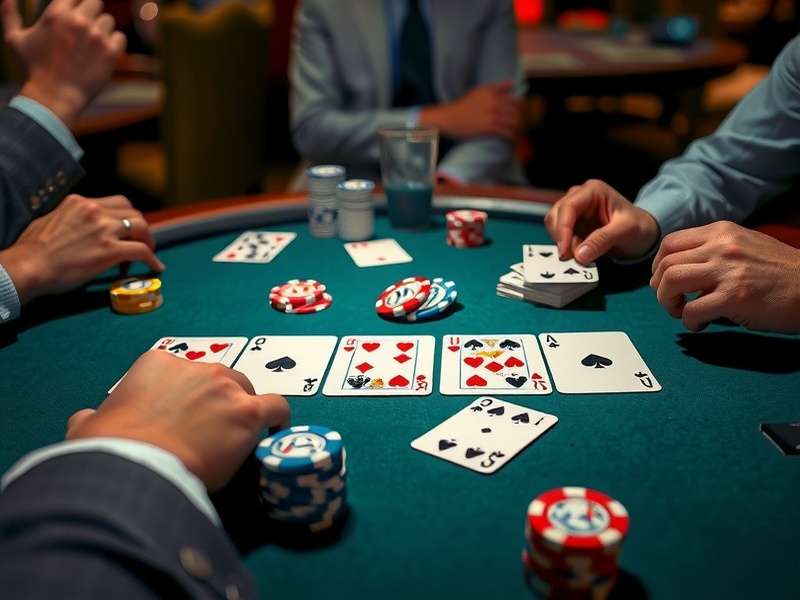
A typical Poker game setup with cards and betting chips
The player to the left of the dealer in the small blind position typically must post a small forced bet, and the player to their left in the big blind position must post a larger forced bet. Each player is then dealt a hand of cards, which they keep hidden from the other players. The development of Poker throughout its history is characterized by the addition of new rules and concepts.
History of Poker 📜
The history of Poker is a matter of debate among historians. The name of the game likely descended from the Irish Poca (Pron. Pokah) ('Pocket') or even the French poque, which descended from the German pochen ('to brag as a bluff' lit. 'to knock'). Yet it is not clear whether the origins of Poker itself lie with the games bearing those names.
It is commonly regarded as sharing ancestry with the Renaissance game of primero and the French brelan. The English game brag (earlier bragg) clearly descended from brelan and incorporated bluffing (though the concept was known in other games by that time). It is quite possible that all of these earlier games influenced the development of Poker as it exists now.
🎯 Key Historical Milestones:
Early 1800s: Poker first appeared in the United States
1970s: World Series of Poker began, popularizing tournament play
1990s: Poker expanded to Indian casinos in the United States
Early 2000s: Online Poker boom began
2010s: Poker became popular in India through online platforms
English actor Joseph Crowell reported that the game was played in New Orleans in 1829, with a deck of 20 cards and four players betting on which player's hand was the most valuable. Jonathan H. Green's book, An Exposure of the Arts and Miseries of Gambling (G. B. Zieber, Philadelphia, 1843), described the spread of the game from there to the rest of the country by Mississippi riverboats, where gambling was a common pastime.
Poker Rules & Gameplay 📋
While Poker has many variations, most follow a similar pattern of play. In most modern Poker games, the first round of betting begins with one or more players making forced bets, usually an ante or blind bet. The dealer then shuffles the cards, cuts, and deals the appropriate number of cards to the players one at a time.
After the initial deal, the first of what may be several betting rounds begins. Between rounds, the players' hands develop in some way, often by being dealt additional cards or replacing cards previously dealt. At the end of each betting round, all bets are gathered into the main pot.
Basic Poker Hand Rankings 🃏
In standard Poker games, the following hand rankings apply (from highest to lowest):
- Royal Flush: A, K, Q, J, 10, all the same suit
- Straight Flush: Five cards in a sequence, all in the same suit
- Four of a Kind: All four cards of the same rank
- Full House: Three of a kind with a pair
- Flush: Any five cards of the same suit, but not in a sequence
- Straight: Five cards in a sequence, but not of the same suit
- Three of a Kind: Three cards of the same rank
- Two Pair: Two different pairs
- One Pair: Two cards of the same rank
- High Card: When you haven't made any of the hands above
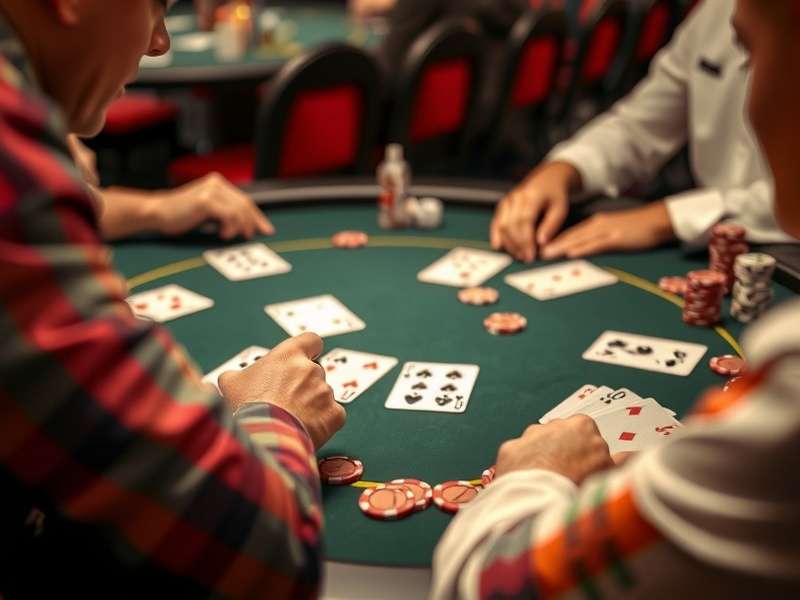
Visual guide to Poker hand rankings
Poker Variations 🎲
There are many different variations of Poker that are played around the world. The most popular variants can be divided into three main categories:
Draw Poker Games
In draw Poker games, players are dealt a complete hand before the first betting round, and then develop their hand for subsequent rounds by replacing cards. The most popular form is Five-card draw.
Stud Poker Games
In stud Poker games, players are dealt a combination of face-up and face-down cards over multiple betting rounds. The most popular form is Seven-card stud.
Community Card Poker Games
In community card Poker games, players are dealt an incomplete hand of face-down cards, and then a number of face-up community cards are dealt to the center of the table. The most popular form is Texas hold 'em.
🌟 Popular Poker Variations:
Texas Hold'em: The most popular Poker variant worldwide
Omaha: Similar to Texas Hold'em but with four hole cards
Seven-Card Stud: Classic Poker game without community cards
Five-Card Draw: Simple Poker variant popular in home games
Razz: Lowball version of Seven-Card Stud
Poker Strategy & Tips 🧠
While Poker does involve chance, it is also a game of strategy where players can influence the outcome with their decisions. Successful Poker players employ various strategies based on game theory, probability, and psychology.
Basic Poker Strategy
For beginners, understanding basic strategy is crucial. This includes knowing which starting hands to play, understanding position at the table, and recognizing betting patterns. A fundamental concept is that you should play fewer hands but play them aggressively.
Advanced Poker Concepts
More advanced players incorporate concepts like pot odds, implied odds, expected value, and hand reading into their gameplay. They also learn to adjust their strategy based on their opponents' tendencies and the specific dynamics of each table.
Strategic decision-making is key to Poker success
Psychological Aspects of Poker
Poker is not just about the cards; it's also about the players. Understanding psychology, including tells (unconscious behaviors that reveal information about a player's hand), tilt (emotional reactions to bad beats), and table image, can give you a significant edge.
💡 Pro Poker Tips for Indian Players:
Start Small: Begin with low-stakes games to build experience
Learn Position Play: Your position at the table significantly impacts strategy
Manage Your Bankroll: Only play with money you can afford to lose
Study the Game: Continuously learn from books, videos, and hand analysis
Stay Disciplined: Avoid emotional decisions and stick to your strategy
Poker in India 🇮🇳
Poker has seen tremendous growth in India over the past decade. While card games have always been popular in Indian culture, Poker specifically has gained mainstream acceptance and a dedicated player base. The game's popularity has been fueled by several factors, including increased internet penetration, the rise of online Poker platforms, and successful Indian Poker players on the international stage.
Legal Status of Poker in India
The legal status of Poker in India varies by state. Some states like Goa, Sikkim, and Nagaland have explicitly legalized and regulated Poker, while others operate in a gray area. The Supreme Court of India has distinguished Poker as a game of skill rather than chance in several rulings, which has helped its acceptance.
Poker Popularity and Demographics
Poker is particularly popular among urban, educated Indians in the 21-40 age group. Major cities like Mumbai, Delhi, Bangalore, and Kolkata have active Poker communities with both online and live games. Tournament series like the India Poker Championship and Deltin Poker Tournament have attracted thousands of players.
📊 Poker in India - Key Statistics:
Player Base: Over 5 million active Poker players in India
Annual Growth: 30-40% year-over-year increase in players
Market Size: Estimated $150 million industry in 2023
Mobile Usage: 85% of Indian Poker players use mobile devices
Regional Popularity: Maharashtra, Karnataka, and West Bengal lead in player numbers
Indian Poker Stars
India has produced several world-class Poker players who have achieved success on the international stage. Players like Aditya Agarwal, Nipun Java, and Muskan Sethi have won major tournaments and helped popularize the game in India through their achievements.
Download & Play Poker in India 📱
Playing Poker in India has never been easier thanks to numerous online platforms and mobile apps. These platforms offer various game types, stakes, and tournaments suitable for players of all skill levels.
How to Get Started with Online Poker
To start playing Poker online in India, follow these simple steps:
- Choose a reputable Poker platform that accepts Indian players
- Download the app or access the website
- Create an account and verify your identity
- Make your first deposit using available payment methods
- Start with play-money games to learn the interface
- Graduate to real-money games at appropriate stakes
Indian Player Reviews and Ratings
Indian Poker players have shared overwhelmingly positive experiences with online Poker platforms:
Rajesh K.
"Amazing Poker experience! The Indian-themed tournaments are fantastic. Withdrawals are quick and customer support is helpful."
Priya S.
"As a beginner, I found the learning resources very helpful. The mobile app works smoothly even on my basic smartphone."
Arjun M.
"Best Poker platform for Indian players. Local payment options and tournaments tailored to our time zones make it perfect."
Localized Features for Indian Players
Leading Poker platforms have introduced several India-specific features:
- Local payment methods including UPI, Paytm, and Net Banking
- Tournaments scheduled according to Indian time zones
- Customer support available in Hindi and English
- Festival-themed tournaments during Diwali, Holi, and other Indian holidays
- Beginner-friendly tables with lower stakes
Indian Poker Community & Resources 👥
The Indian Poker community has grown significantly, with numerous resources available for players to learn, discuss strategy, and connect with fellow enthusiasts.
Indian Poker Forums and Discussion Groups
Several online forums and social media groups cater specifically to Indian Poker players. These platforms allow players to share experiences, discuss hands, and learn from each other. Popular options include dedicated sections on international Poker forums as well as India-specific communities.
Poker Training Resources for Indian Players
Many training sites now offer content specifically tailored to Indian Poker players, considering the unique aspects of the Indian Poker ecosystem. These resources range from free beginner guides to paid advanced strategy courses.
Live Poker Events in India
Before the pandemic, India hosted numerous live Poker tournaments attracting players from across the country and internationally. As restrictions ease, these events are returning with enhanced safety measures. Major tournament series typically feature events with buy-ins ranging from affordable to high-roller levels.
🗓️ Upcoming Indian Poker Events:
India Poker Championship: Quarterly series in Goa with events for all budgets
Deltin Poker Tournament: Regular tournaments on Deltin cruise ships
National Poker Series: Online tournament series with nationwide participation
Diwali Poker Festival: Special festival-themed online tournaments
Game Information 🎮
Game Types
Popular Tags
Recommended by Daman Games
This Poker game is proudly recommended by Daman Games. To discover more premium Indian games, visit Daman Games for the best gaming experience tailored for Indian players.